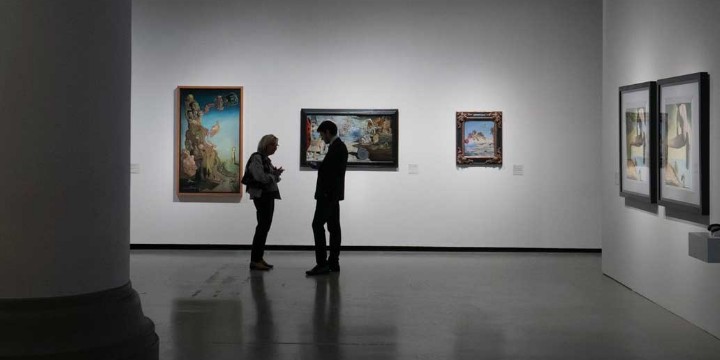
Abertis, with culture worldwide
23 September 2019
The Abertis Strategic Corporate Social Responsibility (CSR) Plan establishes the involvement of the Group in the communities where it carries out its business.








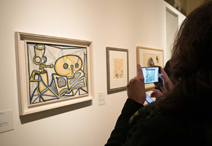

Max Beckmann (Leipzig, 1884 – New York, 1950) was one of German’s leading 20th century artists.
The exhibition “Max Beckmann. Exile figures”, sponsored by Abertis at the Thyssen-Bornemisza Museum (Madrid) from 23rd October 2018 to 27th January of this year, revealed many details of the life and works of this independent, solitary man. Beckmann developed an impressionistic style with his own language, a far cry from any of the trends of his contemporaries.
Berkmann left Germany in 1903 and moved to Paris for a year, where he came into contact with the work of the Impressionists and discovered Cézanne and Van Gogh. He lived in Berlin from 1904 up to the 1st World War. He enlisted voluntarily for the War, but had to abandon the front owing to a nervous breakdown. The war sharpened his scepticism and disillusionment, and his style of painting became more dramatic. In 1915 he settled in Frankfurt. During the 1920s he painted many portraits and self-portraits, figurative themes, landscapes and still-life scenes. The arrival of Nazism marked a turning point in his life and cut short his rise to fame at the end of the decade. For some years he divided his time between Paris and Amsterdam. In the Dutch city, where he sought refuge during the 2nd World War, he produced important series of graphic works, prominent among which are the lithographs of the Apocalypse, which reflect his personal vision of the conflict. In 1945 he moved to the United States where he lived for the rest of his days.
23 September 2019
The Abertis Strategic Corporate Social Responsibility (CSR) Plan establishes the involvement of the Group in the communities where it carries out its business.
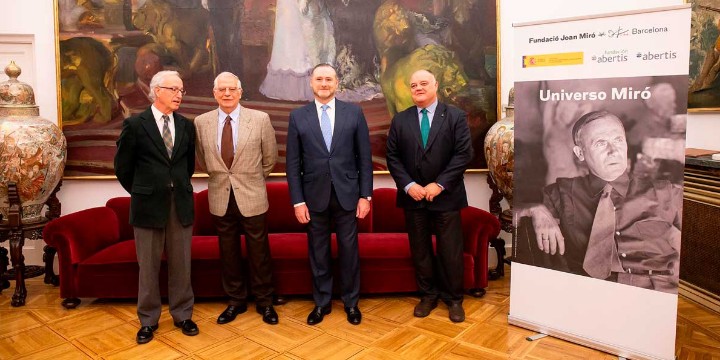
23 September 2019
The exhibition “Miró: la experiencia de mirar” (Miró: the experience of looking)was held at the National Museum of Fine Arts in Buenos Aires (Argentina) from 25th November 2017 to 25th February 2018.
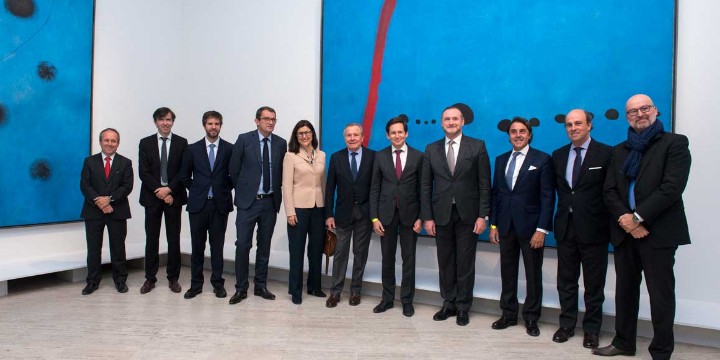
23 September 2019
In the previous summary we indicated that the artist Joan Miró maintained a close link with the avant-garde scene in Paris from his youth until a ripe old age. The exhibition sponsored by Abertis at the Grand Palais enabled the Catalan painter to return to the French capital.
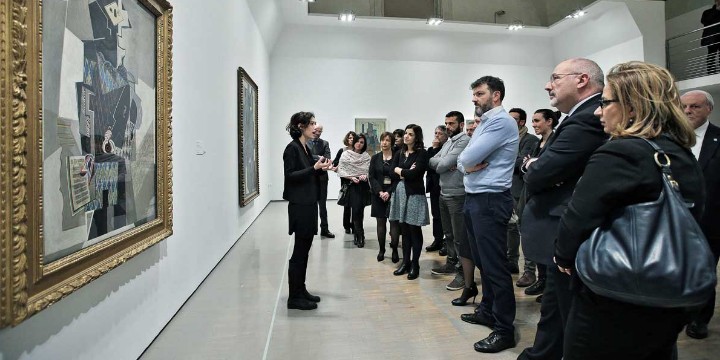
23 September 2019
In February 1917, Europe was immersed in the 1st World War. Pablo Picasso was 36 years old then, but was already a great artist who had started the Cubism revolution.